

Specialized Bosch Appliance Repair in San Francisco
Mon–Sat: 8:00 AM – 7:00 PM
Preheat finishes but food still cooks slowly in your Bosch oven? Check the oven rack position, the door seal and thermometer test.
If your Bosch oven reports that it has finished preheating but food still takes longer than the recipe says, the oven’s own sensor may be satisfied while the cavity is not evenly hot, or the way you load it has changed. Check rack position, the door seal and the size of the load, then compare the dial with an oven thermometer before deciding whether a repair is needed.
The preheat signal tells you the oven’s sensor has reached the set point at one spot. It does not tell you the walls, the racks or the food have caught up. A pan that sits on a cold rack, a dark pan against a pale one, or a crowded oven with little room for air to move will all lengthen a cook even when the preheat signal was on time. It helps to wait several minutes after the signal before loading, and to note whether the recipe time works better when you do.
Move the rack to the position the recipe suggests and use a single pan at first. Foil laid across a rack, or a baking sheet that is nearly as wide as the cavity, can block the flow of heat in a way that changes cooking time without any fault. On a wall oven such as the HBLP651UC, a Benchmark 30-inch double wall oven listed at 29 3/4 inches wide and 52 1/16 inches tall, check you are using the oven you think you are; with two cavities it is easy to cook in one while the other was the one preheated.
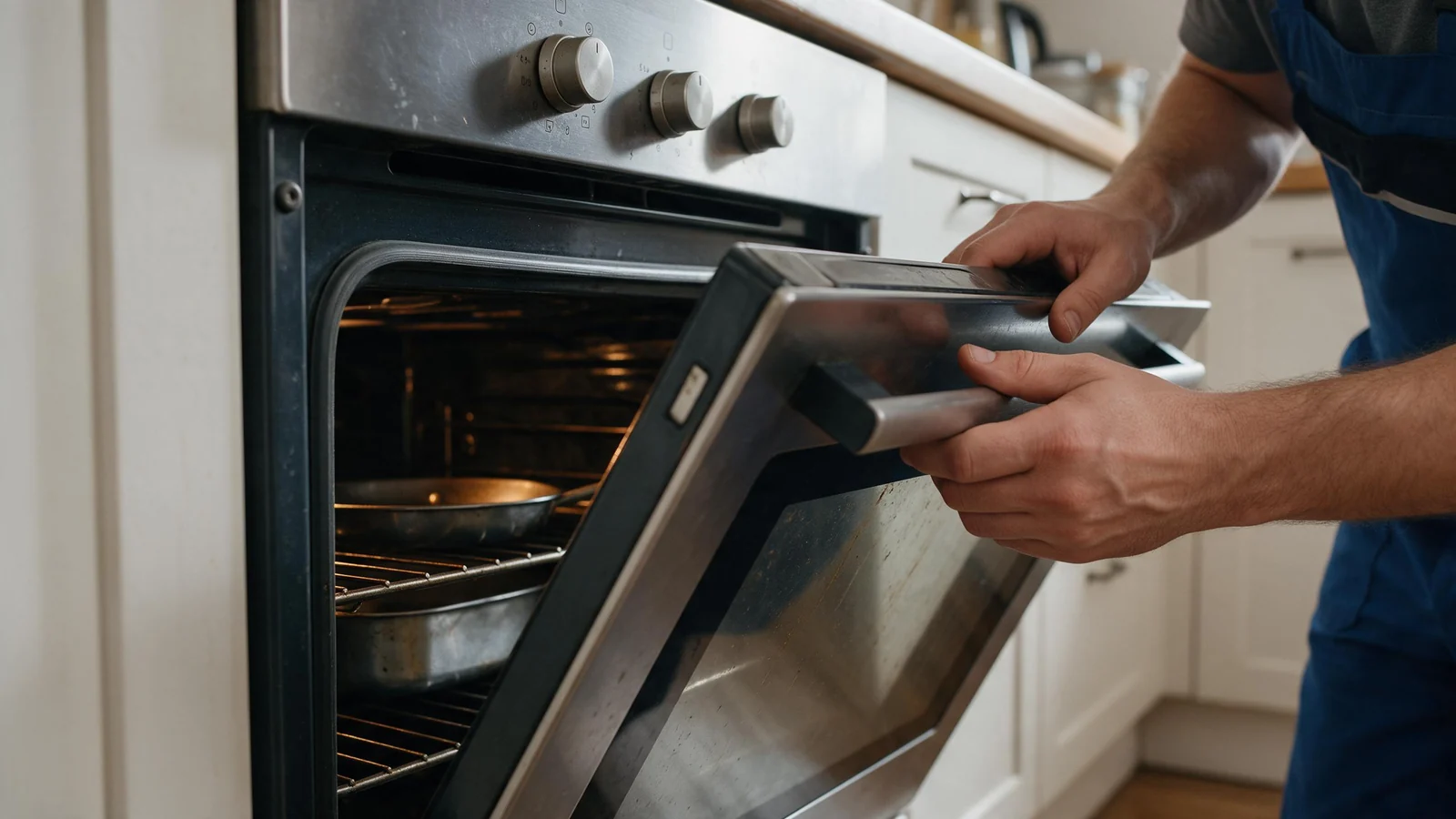
Close the door on a strip of paper at several points around the frame. If it slides out easily in one place, the seal may not be pressing, and heat will escape throughout the cook. Look also for a gasket that is flattened, torn or covered in baked-on grease. Do not scrub a gasket aggressively or force the door hinges. A loose seal or a door that does not close squarely needs a technician’s eye.
Oven size changes how quickly the cavity recovers when you open the door. The HGS8055UC, an 800 Series 30-inch gas range, lists an oven cavity of 3.6 cu. ft., while the HGS5657UC, a range with a nominal 36-inch size, lists five sealed gas burners on its cooktop. If you moved to a new range recently or swapped between ovens, recipe times may simply need adjusting. A big roast in a moderate cavity needs more time than the same recipe in a roomier one.
A low or unsteady supply can show up as sluggish performance. Bosch lists U400 as supply voltage incorrect, outside the normal operating range, and says to contact your electrical utility provider. On a range, dE means demo mode is activated and cooking zones do not heat; the listed step is to switch the breaker off for 30 seconds. If you see F4, electronics have overheated and all cooking zones switched off, and Bosch’s step is to wait for cooling and touch any control. None of these is a fix for slow cooking on its own, but any of them showing up alongside the symptom is useful to report.
A large, consistent gap means the temperature control or heating is off. A small gap with long cook times points back to loading and airflow.
A thermometer shows what the cavity does at one spot. It cannot show whether an element is partly failing, a sensor is reading off, or the control is misjudging the temperature. A fan that has slowed can also leave hot and cold zones that one thermometer will not catch. Those need measurements with the oven open to a technician’s tools, and are not for owners to attempt.
Our visit covers supply, sensor readings, element behaviour and the door seal, and we read any stored fault. See our oven repair page and the oven information page. Have the model and serial number from the rating label, your thermometer readings, the recipe time that used to work and the time it takes now, and when you first noticed the change.
The preheat signal reflects the sensor, not the whole cavity. Give it a few extra minutes, check rack position and the door seal, and compare with a thermometer.
Use a freestanding thermometer on the middle rack and compare it with the dial after a steady run. A large, repeatable difference means the oven needs testing.
Yes. Heat that leaks around the door lengthens cooking times, so a flattened or torn gasket is worth reporting.
Share a few details and we’ll confirm an appointment. Prefer to talk? Call us and we’ll help right away.